 The Breed Book
Miniature vs Standard Dachshund: Size, Cost & How to Choose
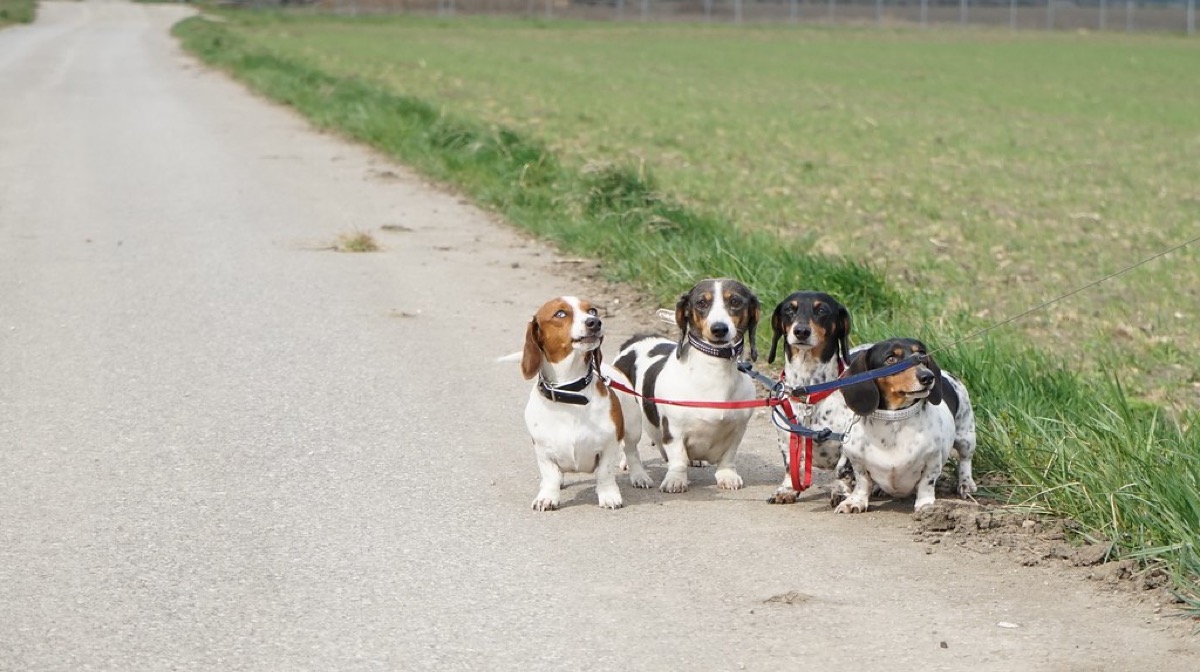
If you have been researching dachshunds, you have probably noticed two sizes listed everywhere: miniature and standard. Here is the thing: they are not separate breeds. The American Kennel Club registers both under the single “Dachshund” breed standard. A miniature dachshund is simply a dachshund bred to a smaller scale, with the same long body, short legs, expressive eyes, and big personality. The choice between them comes down to your home, your lifestyle, and honestly, a few practical realities like cost and long-term care. This guide walks through every meaningful difference so you can make a confident decision.
Size at a Glance
| Miniature | Standard | |
|---|---|---|
| Adult weight | 8-11 lbs | 16-32 lbs |
| Height | 5-6 in | 8-9 in |
| Typical lifespan | 12-16 yrs | 12-16 yrs |
Size and Space: What Each Dog Actually Needs
Neither size is a high-energy working dog that needs a yard to run laps. Dachshunds were bred to hunt by scent and flush game from burrows, so they are curious and tenacious on a walk, but they are equally content curling up on the sofa for long stretches.
That said, size does matter for your living situation in a few concrete ways.
Miniature dachshunds typically weigh 8-11 lbs at full maturity. That compact frame makes them genuinely well-suited to apartment life. They need two short walks a day and some indoor play to stay satisfied. Elevator buildings, no-yard rentals, and city living all work fine. One practical bonus: they take up almost no space in a car, on a couch, or in your luggage when you travel with them.
Standard dachshunds land in the 16-32 lb range, which is still a medium-small dog by most measures. They are not difficult to manage in an apartment, but they do need a bit more daily exercise to stay lean and mentally settled. A standard who does not get enough movement can become destructive or bark-heavy. Access to a small yard or a nearby park helps, though it is not strictly required if you commit to regular walks.
Both sizes share one important structural reality: those long backs and short legs mean jumping on and off furniture repeatedly is hard on their spines. Dog ramps or steps next to beds and sofas are a worthwhile investment regardless of which size you choose.
Temperament: One Personality in Two Sizes
Ask any long-time dachshund owner whether the mini and the standard have different personalities, and most will give you the same answer: not really.
Both sizes tend to be:
- Stubborn and independent (they were bred to make decisions underground, alone, without handler guidance)
- Loyal to the point of being velcro dogs with their primary person
- Alert and vocal, meaning they will bark at sounds, strangers, and sometimes nothing apparent
- Curious and food-motivated, which makes them trainable when you find the right reward
The one nuance owners sometimes report is that miniatures can skew slightly more anxious or reactive, possibly because they are small enough that the world feels more threatening. But this is heavily influenced by socialization and individual breeding lines rather than size alone. A well-socialized miniature from a careful breeder will be calm and confident. A poorly socialized standard can be a nervous barker. Breeding and early experience matter far more than the size category.
One thing both sizes share: they are not pushovers for first-time owners. They need consistent, patient training and clear boundaries. They respond well to positive reinforcement and very poorly to harsh corrections. If you want a dog that trains easily and defers to you automatically, look elsewhere. If you find a clever, opinionated dog charming, you will love a dachshund in either size.
Cost Differences
Purchase price for a miniature dachshund from a reputable breeder is often somewhat higher than for a standard, though this varies significantly by region, coat type (smooth, long, wirehaired), and color. In 2026, miniatures often run around $1,500 to $2,500 versus roughly $1,200 to $2,000 for standards, though the overall breeder range for either size is about $1,000 to $3,000, and rare colors like dapple or piebald carry premiums in both (iHeartDogs, Canine Journal).
Ongoing costs diverge in a few predictable ways. Standards eat more food, which adds up over a 12-16 year lifespan. Standards also need slightly larger supplies: bigger crates, heavier-duty ramps, and potentially higher medication doses when weight-based dosing applies. Miniatures, being lighter, generally cost a bit less per year on routine care.
For a detailed breakdown of what to expect to spend across the first year and over a lifetime, use our dachshund cost calculator. It covers food, vet visits, preventive care, and gear for both size categories.
Health Considerations
This is the section where both sizes are genuinely equal, and not in a reassuring way. Dachshunds are one of the breeds most prone to intervertebral disc disease (IVDD), a spinal condition caused by the same elongated spine that makes them so visually distinctive. Discs can bulge or rupture, causing pain, partial paralysis, or in severe cases full hindquarter paralysis.
Miniatures are not safer from IVDD than standards. Both sizes carry the same structural risk. The main controllable factors are:
- Keeping your dog at a healthy weight (excess weight dramatically increases disc stress)
- Using ramps instead of letting the dog jump repeatedly from heights
- Avoiding activities that hyperextend or torque the spine, like rough play with larger dogs
Surgery for a serious IVDD episode commonly costs $3,000 to $8,000, and total costs can reach $6,000 to $12,000 once MRI imaging and aftercare are included (Vety). Pet insurance that covers hereditary conditions is worth pricing out before you bring either size home.
For a full guide on reducing your dog’s IVDD risk through exercise, weight management, and home setup, see our article on IVDD prevention.
Which Is Right for You?
There is no universally correct answer, but here are the patterns that tend to hold up.
Choose a miniature if: You live in an apartment or a home without outdoor space. You travel frequently and want to bring the dog along. You have limited physical strength or mobility (an 8 lb dog is easier to lift and manage at the vet). You prefer a dog that is slightly less demanding on daily exercise time.
Choose a standard if: You have more space and an active daily routine that includes longer walks. You have children who play enthusiastically with dogs (standards are slightly more sturdy in rough-and-tumble situations, though supervision is always necessary). You simply prefer a bigger dog and have done the exercise math.
For first-time dog owners: Both sizes are manageable, but neither is a beginner-easy dog in terms of training. If you are new to dog ownership, budget extra time for training classes and be realistic about the stubbornness curve. The size you pick matters less than your commitment to consistent training from day one.
For families with young kids: Dachshunds can coexist well with children, but their long backs make them vulnerable to being dropped or squeezed. Standards are a bit more robust. Either way, teaching children how to handle a dachshund safely is non-negotiable.
Frequently Asked Questions
Is a miniature or standard dachshund better for apartments?
Both can work in apartments, but miniatures have the edge. They need slightly less exercise, take up less space, and tend to be quieter neighbors in terms of thumping around the unit. The bigger factor for apartment living is actually training: a dachshund of either size that has been taught to settle and not bark excessively will make a better apartment dog than an untrained one.
Do miniature dachshunds have more health problems than standards?
Not in any clear-cut way. Both sizes share the same IVDD risk due to their spine structure. Some breeders and veterinarians note that very small miniatures, sometimes called “toy” or “tweenie” by unofficial terminology, can have additional fragility concerns, but within the recognized miniature size range (under 11 lbs), the IVDD-related profile is broadly similar to the standard. One genuine difference: miniatures have a higher likelihood of Lafora disease, a late-onset form of epilepsy (A-Z Animals).
Which size lives longer?
The typical lifespan listed for the breed is 12-16 years, which is quite long for a dog. Some sources report miniatures living slightly longer on average (often cited around 14-17 years versus 12-14 for standards), which fits the general pattern of smaller dogs outliving larger ones (Canine Journal). Still, individual genetics, diet, weight management, and good veterinary care are stronger predictors of longevity than size category.
Are miniature dachshunds harder to train?
Not inherently. Both sizes are equally stubborn and equally food-motivated. Training difficulty comes from the breed’s independent nature, not from the size. Short, positive sessions with high-value treats work well for both. Where miniatures can be trickier is in housetraining: some owners report that very small dogs are harder to fully housetrain, possibly because their bladders are smaller and accidents are easier to miss. Consistent schedules and crate training help with both sizes.
Can a miniature and a standard dachshund live together?
Yes, and many multi-dachshund households do exactly this. Dachshunds are generally social with other dachshunds and tend to bond well in pairs or small groups. The size difference is small enough that rough play rarely causes injury, though a standard playing very enthusiastically with a mini is worth monitoring. Most owners report that the two sizes get along as well as any two dogs with compatible temperaments.