 The Breed Book
Dachshund Colors and Coat Types: The Complete Guide
General information, not veterinary advice. We research and cite our sources, but every dog is different. For anything medical, talk to your own vet.
Dachshunds come in a genuinely dazzling range of colors and patterns, more than almost any other breed. That variety is part of their charm. It is also, unfortunately, a tool that some breeders use to charge inflated prices for dogs with serious inherited health problems. This guide covers every coat type and color, and then tells you the honest truth about the “rare” ones, because color should never come before health.
The Three Coat Types
Before color, there is texture. Dachshunds come in three coats, and each can carry almost any of the colors below.
- Smooth: Short, shiny, close-lying. The classic dachshund look and the lowest-maintenance coat.
- Long-haired: Soft, slightly wavy, with feathering on the ears, chest, legs, and tail. The most grooming-intensive.
- Wire-haired: Coarse, dense, with bushy eyebrows and a beard. Needs occasional hand-stripping.
For the full grooming breakdown by coat, see our shedding and grooming guide.
Standard Colors
The Dachshund Club of America recognizes a clear set of colors (DCA). The most common are:
- Red: From deep rust to light golden. The most popular color.
- Cream: A pale, elegant shade, including the prized “English cream” in long-hairs.
- Black and tan: Black body with tan points on the face, chest, and legs.
- Chocolate and tan: A rich brown in place of black.
- Blue and tan: A diluted grey (see the health note below).
- Isabella (fawn) and tan: A diluted, pale beige-brown (also see below).
Wire-haired dachshunds add two coat-specific colors: wild boar (a grizzled, banded look) and wheaten.
Patterns
On top of a base color, a dachshund can carry a pattern:
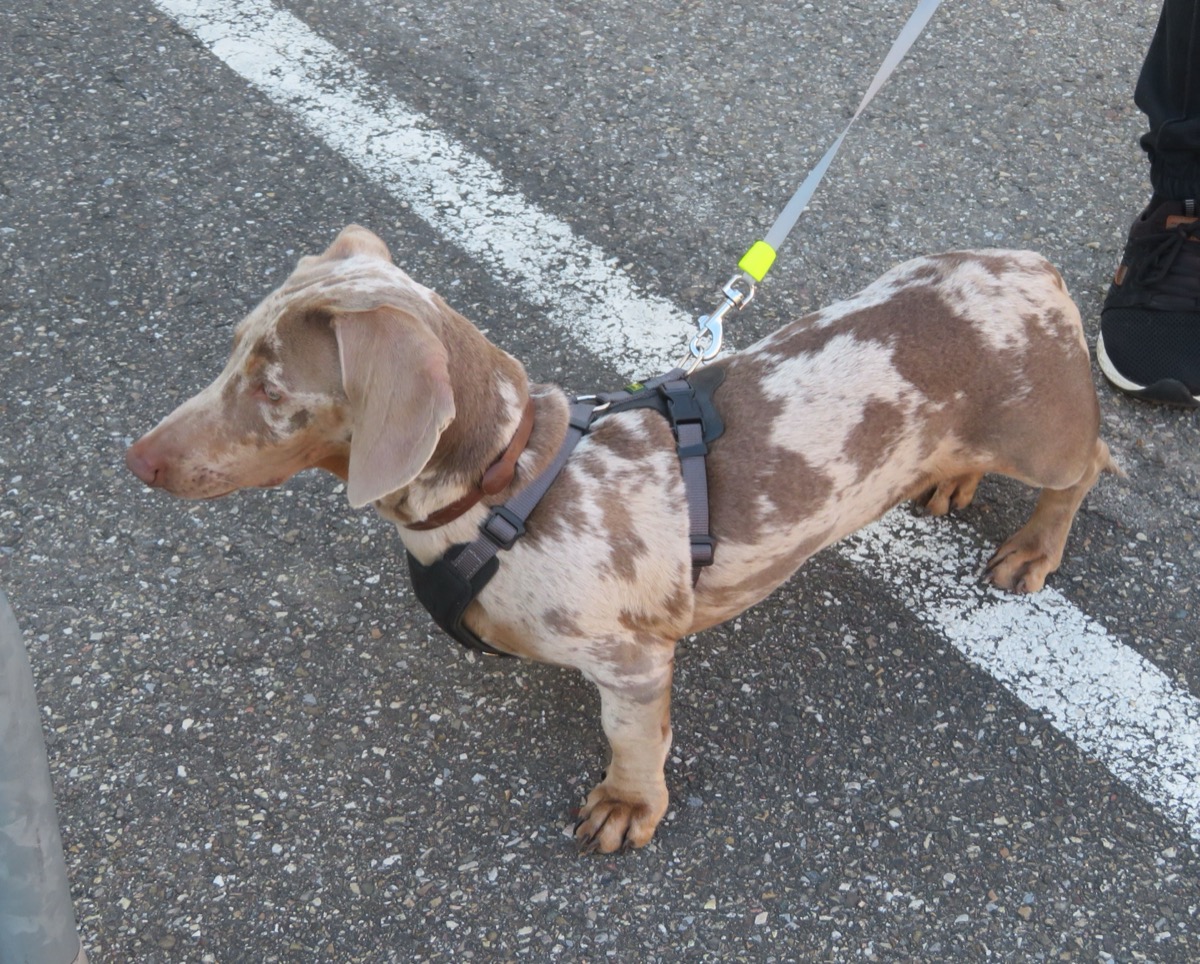
- Dapple: Mottled, marbled patches of lighter color over the base. The dachshund word for what other breeds call merle.
- Brindle: Subtle tiger-like striping.
- Sable: Individual hairs banded dark at the tip over a red base, giving a shaded look, most visible on long-hairs.
- Piebald: White areas with colored patches, with a colored head.
The Honest Truth About “Rare” Colors
Here is the part that matters most, and the part that “what color should I get” articles usually skip. Some of the most heavily marketed, most expensive dachshund colors carry real, well-documented health risks.
Double Dapple: The Dangerous One
A double dapple is produced by breeding two dapple dachshunds together, so the puppy inherits two copies of the dapple (merle) gene. That combination is linked to serious defects: deafness, blindness, and malformed or missing eyes (microphthalmia). Studies of merle dogs have found markedly higher deafness rates in double merles, and the eye defects are well documented (LSU).
This is taken so seriously that the Dachshund Club of America removed the double dapple from its breed standard, and the UK Kennel Club will not register puppies bred from two dapple parents (Dachshund Breed Council). A single dapple dachshund (one copy of the gene) does not carry these risks. The danger comes only from mating two dapples. A responsible breeder never does this.
Blue and Isabella: The Dilutes
Blue (diluted black) and isabella (diluted chocolate) look striking, but the same dilution gene that lightens the coat is linked to color dilution alopecia (CDA), a progressive, incurable condition that causes thinning hair, bald patches, and recurring skin infections (VCA). It is not guaranteed in every dilute dog, but the rates are high: a 2021 Dachshund Health UK survey found around 74% of blue dachshunds were affected by CDA or related skin conditions, compared with about 28% across all colors (Dachshund Health UK).
”Rare” Is a Marketing Word, Not a Health Feature
If a breeder advertises “rare” colors, “exotic” dachshunds, or “all colours available,” treat it as a warning sign, not a selling point. National welfare and breed organizations are blunt about this: prioritizing color over health is a hallmark of irresponsible breeding, and you should not pay a premium for it (ASPCA). Reputable breeders do not call their colors rare, and they do not charge more for them.
How to Choose Responsibly
Pick the dog, not the color. A healthy, well-bred red or black-and-tan dachshund from a breeder who health-tests will give you far more years of joy than a “rare” double dapple or dilute bought at a premium and prone to lifelong problems. Ask any breeder about health testing, meet the parents, and walk away from anyone leaning on color as the headline. Then have fun with the easy part, like picking a name. For everything else about the breed, start at our dachshund hub.
Frequently Asked Questions
What is the rarest dachshund color?
Isabella (fawn) is among the least common recognized colors, because it needs a specific double-recessive genetic combination. But “rare” should not mean “more expensive” or “more desirable,” especially when the rarity comes from dilution genes linked to skin problems.
Are double dapple dachshunds unhealthy?
They carry a high risk of serious defects, including deafness, blindness, and malformed or missing eyes. The pattern was removed from the breed standard for this reason, and responsible breeders never produce double dapples. A single dapple does not carry these risks.
Do blue or isabella dachshunds have more health problems?
Often, yes. The dilution gene behind both colors is linked to color dilution alopecia, an incurable coat and skin condition. Surveys have found a large majority of blue dachshunds affected by it or related issues. The color is real and recognized, but it comes with a real risk.
Should I pay more for a rare-colored dachshund?
No. Breed and welfare organizations agree that charging a premium for color is a red flag for irresponsible breeding. A puppy’s color should never cost extra, and “rare colour” advertising often signals a breeder prioritizing profit over health.
Does coat color affect a dachshund’s personality?
No. Personality is shaped by genetics for temperament, socialization, and training, not by coat color. A red, a cream, and a black-and-tan dachshund are equally likely to be loyal, stubborn, and loud.
Sources
- Dachshund Club of America: Breed Standard
- Dachshund Breed Council (UK): Breed Standard and Colours
- Dachshund Health UK: Colour Dilutes (CDA)
- LSU (Dr. George Strain): Deafness and the Merle Gene
- ASPCA: 'Rare' or Exotic Puppies Signal Red Flags
- VCA Hospitals: Color Dilution Alopecia in Dogs
- iHeartDogs: Dachshund Colors